0

Join our list and get 5 free video / tab downloads!

The Synchronicity Seminar is here!

Axes Of Motion

By

Wrist motion is typically thought of as operating in two axes. Motion in a semicircle from the thumb to the pinky is called wrist deviation:

The names for the two directions of the deviation movement are derived from the bones in the forearm, the radius and the ulna. Movement toward the radius is radial deviation, and movement toward the ulna is ulnar deviation. For this reason, wrist deviation is sometimes referred to as radial-ulnar deviation, or simply RUD.

Perpendicular to the deviation axis is the flexion-extension axis:

Movement in the direction of the palm is wrist flexion, and movement in the direction of the knuckles is wrist extension. Together, this axis of movement is referred to as wrist flexion-extension, or abbreviated as FE.

By combining these two planes of motion, the wrist can move parallel to the strings, perpendicular to the strings, or anywhere in between. In actual practice, because of the tilted forearm position required to switch strings efficiently, the most common wrist motions used in picking technique are in fact the “in-between” ones that require some amount of each motion working together.
Teemu Mäntysaari Live 2018

By

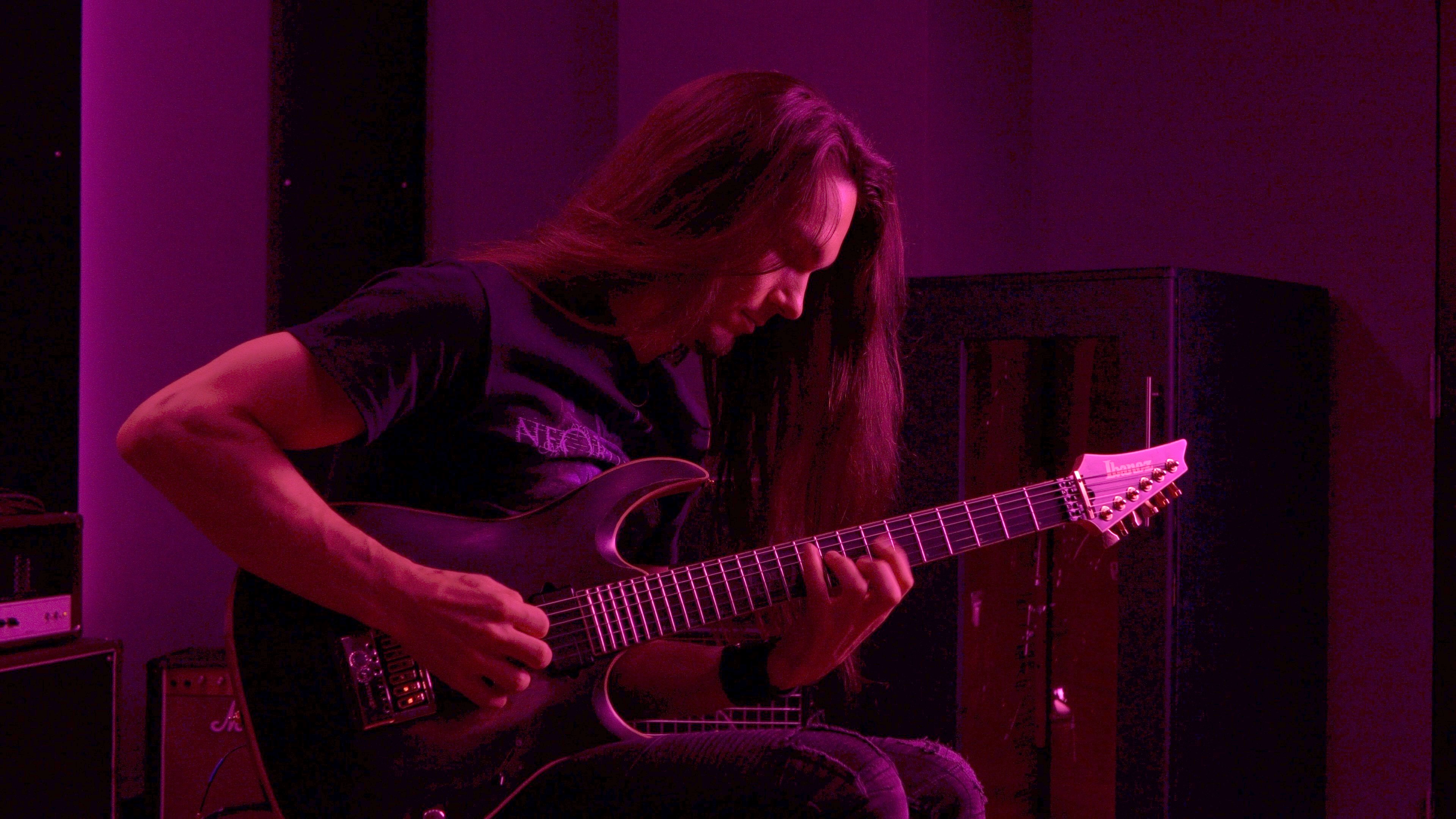
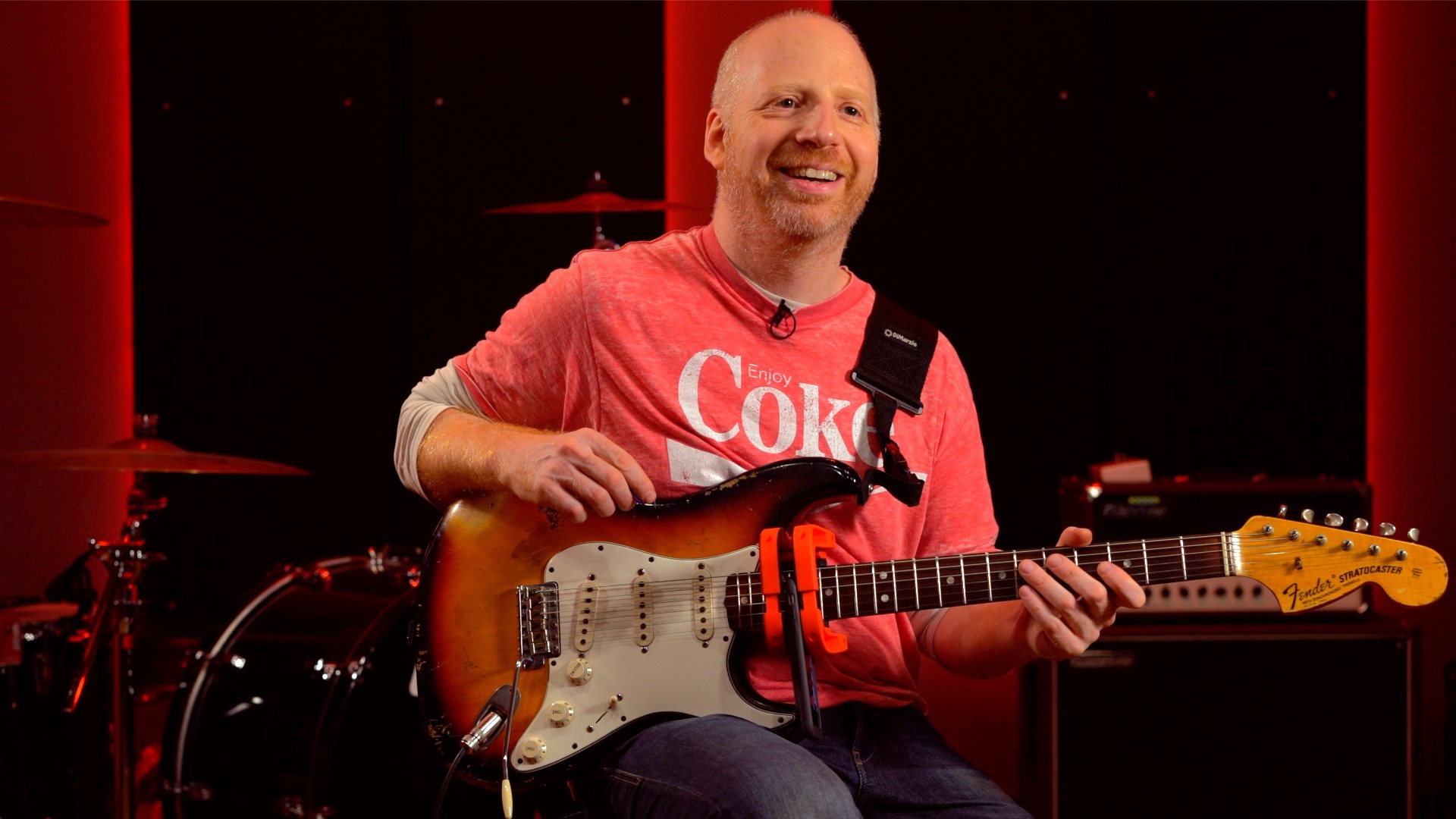
The amazing Teemu Mäntysaari stopped by the Cracking The Code Studio after the final show of Wintersun’s North American tour to share his trademark tastefully blazing playing and thoughtful insights on everything from gear to teaching.

In fact, because Teemu maintains an active teaching schedule even when the band is on the road, a slate of lucky students got to visit him backstage at New York’s storied Irving Plaza on the day of the show for a guitar lesson. How cool is that?

Teemu was also game to try out a motion capture sensor which had fortuitously arrived the same day Teemu did. We managed to get it up and running for a very cool demonstration his famously fluid forearm-driven lead and rhythm techniques, visualized in 3D on our iPad.

Oz Noy

By

Oz Noy weaves a seemingly endless stream of colors into a fabric of jazz, rock, and blues that is uniquely his own.

That Oz’s musical vocabulary is so diverse and unpredictable is no surprise. Across these two compact conversations, Oz demonstrates in hands-on fashion how he develops both his technique and his vocabulary. And it’s far from the kind of rigidly exercise-driven approach we might consider conventional. Instead, it’s a process of controlled chaos and experimentation that throws harmony, fretboard shapes, and picking techniques into a blender to see what comes out.

Oz will tell you he doesn’t think much about his phenomenal technique. Then he’ll spend five minutes demonstrating subtleties of forearm position, hand anchoring, tracking, and muting that has taken us years of interviews to uncover. So clearly, there is awareness. Oz’s gift is how he employs and directs that awareness from a distance, so that it has room to find the music naturally.

The ability to develop complex physical skills by feel is not just a mark of elite musicians like Oz. It’s a power that transcends music and extends to the core of human learning. This thoroughly fun pair of conversations is a great window into how that process can work in the hands of a master.

Lessons

By

At Cracking the Code, we’ve spent decades investigating the ways that real-world technique actually works.

We’ve built that knowledge into a wide range of lesson formats, from targeted tutorials like the Pickslanting Primer and our Talking the Code broadcasts, to multi-chapter investigations of iconic players like our Volcano and Cascade seminars.

And let’s not forget fun. In Tube Tutorials you’ll find hands-on lessons that blend learning and entertainment, like our pair of Crossroads lessons that have been viewed almost four million times on YouTube. And of course you’ll also find the original Cracking the Code series that started it all.

Pickslanting Primer

Cracking the Code's guide to learning picking motions


Seminars

In-depth multi-chapter investigations of select musical topics


Talking the Code

Live help sessions and tutorials on cutting-edge topics from our latest research and interviews


Tube Tutorials

Features and lessons produced for the web in our signature multimedia style


Cracking the Code: The Series

The epic investigation that started it all: a 12-episode journey of guitar learning


Frank Gambale

By

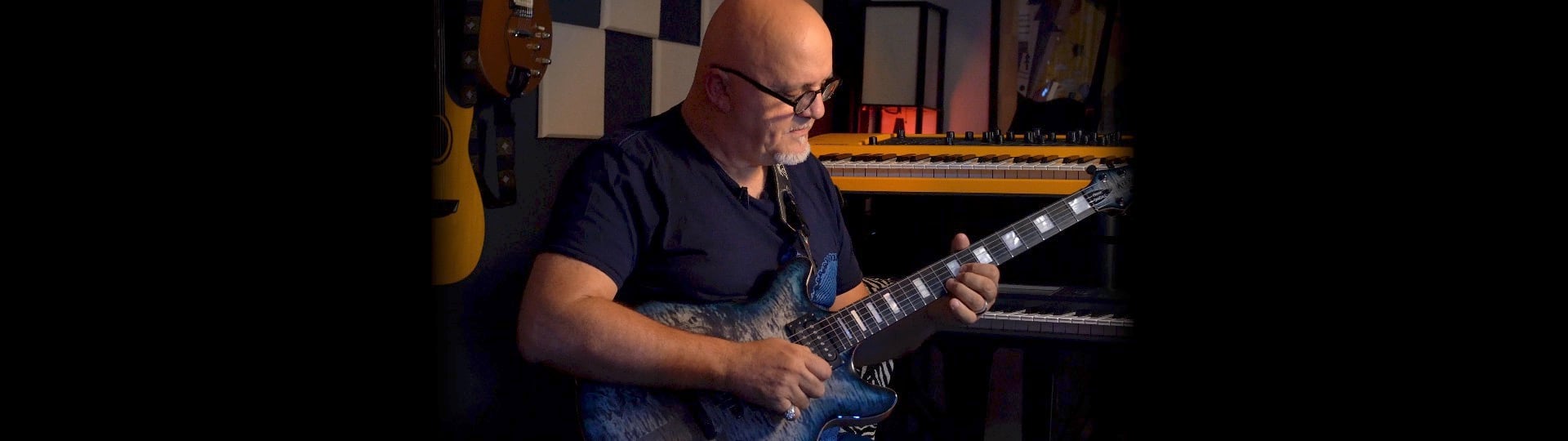
Frank Gambale has made paradigm-shifting contributions to the technical development of the guitar.

As a picking motion, sweeping has always existed somewhere in the guitar consciousness. Tal Farlow, Joe Pass, George Benson, even Django have all used elements of one-way economy.  But Frank unleashed its full potential by giving it two dimensions.  Not only that, he provided a method to go along with it: odd numbers of notes on each string allowed you to keep moving in one direction, and even numbers allowed you to turn around. Suddenly, it was no longer just instrument technique. It was engineering applied to guitar picking mechanics, and opened the floodgates to what was really possible:  Gambale Sweep Picking.

But Frank’s technical breakthroughs would have found far less of an audience if he weren’t such a damn great player. Frank’s effortless command of harmony, his indomitably funky sense of time, and his unmistakably rich tone are all immediately identifiable.  After seeing video of his live performances and hearing his first two albums, Chick Corea recruited Frank from his teaching gig Musician’s Institute for the seminal Elektric Band, where Frank’s space-age style was a perfect fit for the group’s daring sensibilities.

In a way, the indelible stamp Frank has left on guitar technique is almost a distraction from the sublime musicianship of the man himself. Because when he really gets into it, the technique disappears, and what remains is only Frank. To watch him play is to witness the dissolution of the mechanical into the musical — a seamless merging of man and machine that gives voice to the swinging muse within.

Frank’s dual citizenship as both a technique pioneer and all-around killer player makes him a perfect fit for a Cracking the Code interview, and it was a true privilege sit down with him.

The one-hour interview contains over 100 musical and technical examples with slow motion video and tablature, including both of Frank’s epic intro and outro solos.

Filming Your Playing

By

If you’re making a Technique Critique for feedback on your playing, it’s important to film yourself in a way that lets instructors and community members see what you’re doing.

What to play

This part is really simple!

  • Platform TC videos are limited to 1 minute long. This is plenty of time for a couple phrases with a few repetitions of each, which is enough to highlight any technical issue you may be experiencing.
  • Please don’t narrate your videos. This just makes it more difficult to find the playing examples. But you definitely can and should include relevant comments in your Technique Critique post. The more specific you can be about the feedback you’re looking for, the better.

Lighting

Cameras need light! No matter what kind of camera you have, it will produce its best image when you give it a bright, evenly lit subject. But the level of interior lighting that most people find comfortable, especially at night, is usually too dark for this.

  • The cheapest and best light source for guitar filming is a window. Indirect window lighting provides very bright, even illumination with minimal shadows.
  • If window light is not available, you can use lamps – just make sure to achieve lighting that is as even as possible. Two lamps positioned a few feet apart are great for this.
  • Do not let sunlight or narrow-beam light sources hit your hand or guitar directly. This will cause very bright “hot spots” in the video image, and the camera will compensate by making everything else in your video too dark to see.
  • Avoid placing bright lights such as lamps or windows in the background of your video. These will also produce hot spots, making you, the subject, too dark.
  • Orient your headstock toward the light source, and make small adjustments until there are no shadows blocking the view of the pick contacting the string.

Choosing Camera Angles

There are two camera angles we like to use for filming playing technique. The first is the familiar orientation where the guitar’s body faces the camera. This is the view you typically see when you watch someone perform, so we sometimes call this audience perspective:

Audience perspective provides a good view of approach angle, wrist offset, and wrist range of motion

When you film in audience perspective, just remember to get far enough away from the camera so you can capture some of your arm in the shot. That provides helpful information about which joints are moving, whether that’s wrist, forearm, elbow, and so on.

The second and more specifically Cracking the Code-style perspective is when you capture a down the strings view of the picking hand, like this:

The “down the strings” view makes it easier to see what kind of pickstroke you’re making, and which strings you’re picking

The key here is that we can look down the strings and see what the pick is doing. One important consideration is to make sure you place the camera close enough to clearly see the pick and which string it is playing. If you put the camera too far back, the pick and string will just be a small fuzzy blur. At the same time, you still want to see some amount of the arm in the shot, so we can see which joints are moving. So those are the requirements: close enough to see the pick, far enough to see the arm. To find that sweet spot, take a few test shots if you need to.

Ideally, you should film clips from both perspectives. This is easier than it sounds. Just play the example once in audience perspective, and then turn headstock toward the camera lens, and play it again.

If you can’t do both views, then use the “down the strings” angle. This is the most Code-friendly view since it tells us what kind of picking motion you’re making, which strings you’re playing on, and how you’re moving from one string to another.

Some other tips to follow:

  • A traditional tripod works fine, even for “down the strings” views.  Just pick up an inexpensive phone holder that you can attach to your tripod, and you’re all set.
  • When you’re filming down the strings, just make sure your fretting fingers don’t block the view of your picking hand. You can change this just by pointing the headstock a little more or a little less toward the camera lens. With a little experimentation you’ll find an angle that’s flat enough to see the pick hitting the strings, but not so flat that the fretting fingers get in the way.
  • If you have a Magnet, you can use that. When you mount it, try set it far enough away from the picking hand to film both the hand and some of the forearm.

Filming With A Phone

If you have a decent smartphone, you have a great tool for filming your picking technique!

Be sure and set your phone to slow motion video mode if you have that option. If you have multiple choices for this, choose 120fps. 60fps is not fast enough to provide smooth slow motion, and the image quality will probably have significant “jello” artifacts. 240fps requires tons of light, and is usually a more pixelated “lo-res” image on top of that. So 120 is the sweet spot. If you’re not sure which frame rate your phone uses for slow motion, you can usually find that somewhere in the settings.

Don’t use the front-facing camera – it’s lower quality and usually not capable of slow motion.

If you’re using a Magnet, please film in vertical video. This will allow you to rotate the video later and fill the entire screen, for a very detailed view.

Once you’ve got your settings and your choice of camera angle / framing, make sure to lock focus and exposure, if you can, to keep the look of the shot consistent while filming. On the iPhone you can do this by touching and holding the screen on the spot you want to focus, before hitting record.

Finally, test to make sure the image is bright enough. Slow-motion video needs much more light to look as bright as regular video, and again this is most noticeable when you’re filming in a spot where the only light is coming from light fixtures. If the video is too dark to see which string the pick is playing, get another lamp, brighter bulbs, or try using indirect window lighting during the day.

Mika Tyyskä

By

Mika Tyyskä is not just an amazing player, composer, multi-instrumentalist, and digital artist. He’s also a multimedia pioneer, whose Guitar Shred Show Flash animation went viral in the pre-YouTube era of the guitar internet, before “going viral” was even a term we used.

The fact that the Shred Show animation itself is still entertainingly playable over a decade later is a testament to the kind of creativity that has always powered the best games, electronic or otherwise. But more enduring even than his interactive creation is the music it spawned.

The character of “Mr. Fastfinger” soon became Mika’s musical alter ego, lending his name to Mika’s band, and appearing in projected form alongside him onstage during original compositions like “Effortless” and “Be Like Wind”. Mika plays both of these in the interview, and they are prime examples of his gift for melody and phrasing, and of his utterly instinctive improvisational maturity. The “Shred Show” was an intentional homage to the guitar styles of the ’80s, but the Mika of today is very clearly, and effortlessly, his own.

With his combination of diverse interests merging into one thoroughly modern musical career, Mika Tyyskä is like Cracking the Code’s brother from another mother. We were so glad to finally meet him.

Getting Started With Cracking The Code

By

Thanks for choosing Cracking the Code! If you’re here to level up your instrument technique, you’re in the right place.

You’ll need to make an account to access most of our stuff, but you can start off with a free account if you like. This lets you browse our instructional content and get a sense of how everything works. It also gives you full access to our forum, including playing advice from our community of friendly and highly technical players. To get rolling, join here, or if you already have an account log in here.

Site Overview

If you’re new to Cracking the Code, here’s a great overview of what we do:

Important Places

The Dashboard is your user homepage on the Cracking the Code site. Start here to check out your viewing history and bookmarks, upload videos of your playing for Technique Critique, and view and edit your results on Cracking the Code tests.

The site homepage is the main directory of all our interviews, lessons, and seminars. If we’ve filmed it, you should be able to find it with only a few clicks from here.

In your account you can edit your contact information, email address and password, easily start and stop your subscription, and locate your downloads

Finally, the Cracking the Code store is where you can sign up for a membership, or purchase any of our downloadable interviews and lessons

Finding Your Purchases

If you have any previous Cracking the Code purchases, you’ll be able to access those downloads in your account. You can still view your purchases and downloads even if you’ve downgraded to a free account for the time being. We’ve made it as easy as possible to turn on and off your subscription as you need.

As the owner of a Cracking the Code product, you also have free access to its online version. These versions contain extra features which are not possible with downloads. This includes:

  • Detailed timelines with clickable links between musical examples, right inside our interviews and lessons
  • The awesome SoundSlice player for synchronized, loopable tablature
  • Multimedia web pages with helpful Wikipedia-style explainers on common technical topics

Learning Technique

If you’re here to work on your playing technique, we strongly suggest starting with the Pickslanting Primer. This sequence of lessons contains fundamental tests of joint motion and picking technique performance that are invaluable in diagnosing common problems related to speed, fatigue, efficiency, accuracy, and more. You’ll also learn about critical topics like escape motion, and which type you’re using:

Pickslanting Primer

Cracking the Code's guide to learning picking motions


Once you’ve got a handle on your core mechanics, explore our collection of seminars for in-depth investigations on specific musical and technical topics:

Seminars

In-depth multi-chapter investigations of select musical topics


Our growing collection of interviews with world-class players is a great place to find ideas for building your technique and your musical vocabulary. The interviews include thousands of expertly-transcribed musical examples, with synchronized timestamps, that pop up when they’re played in the discussion:

Interviews

Conversations with elite players and researchers


Feedback On Your Playing

For customized expert-level feedback on your playing technique directly from us, you can check out our Technique Critique feature, included with every membership.

The dashboard is your command center for Technique Critique. You’ll find links to your TC library for feedback from instructors, along with a directory where you can browse and learn from Technique Critiques created by other users.

Technique Critique

Get personalized feedback on your playing from instructors and community members


Another valuable resource is our forum. It’s a great place to get advice from our community of helpful and highly technical players, and partake in discussions of all things music and mechanics. When you’re ready, head over and introduce yourself!

Cracking the Code Forum


Getting Help

For more about how the site works, head to our Help Center at any time. There, you’ll find information on navigating the site, using the video and tablature players, creating and uploading video Technique Critiques, using the forum, and troubleshooting issues with your Magnet phone camera mount:

Cracking the Code Help Center


For more specific requests about your account, past purchases, username or password, or to troubleshoot technical issues you encounter on the site, just send a note to our support account and we’ll get on it asap. We usually respond the same day on business days, and somewhat less frequently on weekends.

Andy Wood Workshop

By

The amazing Andy Wood dropped by the studio for two days of live broadcasts, question and answer sessions, and hands-on exploration of his favorite torture devices: electric guitar, acoustic guitar, and mandolin.

Andy’s famously musical and fearsomely precise technique is the result of years of formative training in bluegrass. The basic structure was forged on mandolin, honed on acoustic guitar, and then translated to electric guitar in his late teens. You heard that right. Despite arriving at his first electrified instrument later than most of us pass our road tests, he nevertheless went on to win Guitar Center’s national Guitarmageddon contest only a few short years later. That’s as compelling a testament as any to the effectiveness of the multi-instrument cross training that Andy used to build his core chops.

Indeed there is a common foundation of picking motions across all his chosen instruments: the wrist. Andy’s devastatingly rapid wrist deviation pickslanting technique enables Paul Gilbert-style scalar sprints across the strings, and his fluid supinated crosspicking technique takes care of more complex phrases that wind their way in between the strings.

For this meeting, we deployed the Magnet for a closeup look at all these mechanics on electric and acoustic guitar. And we debuted a headstock camera on Andy’s mandolin to capture a wider view of his technique that includes a view of his forearm setup and motion.