0

Join our list and get 5 free video / tab downloads!

The Synchronicity Seminar is here!

Synchronicity

By

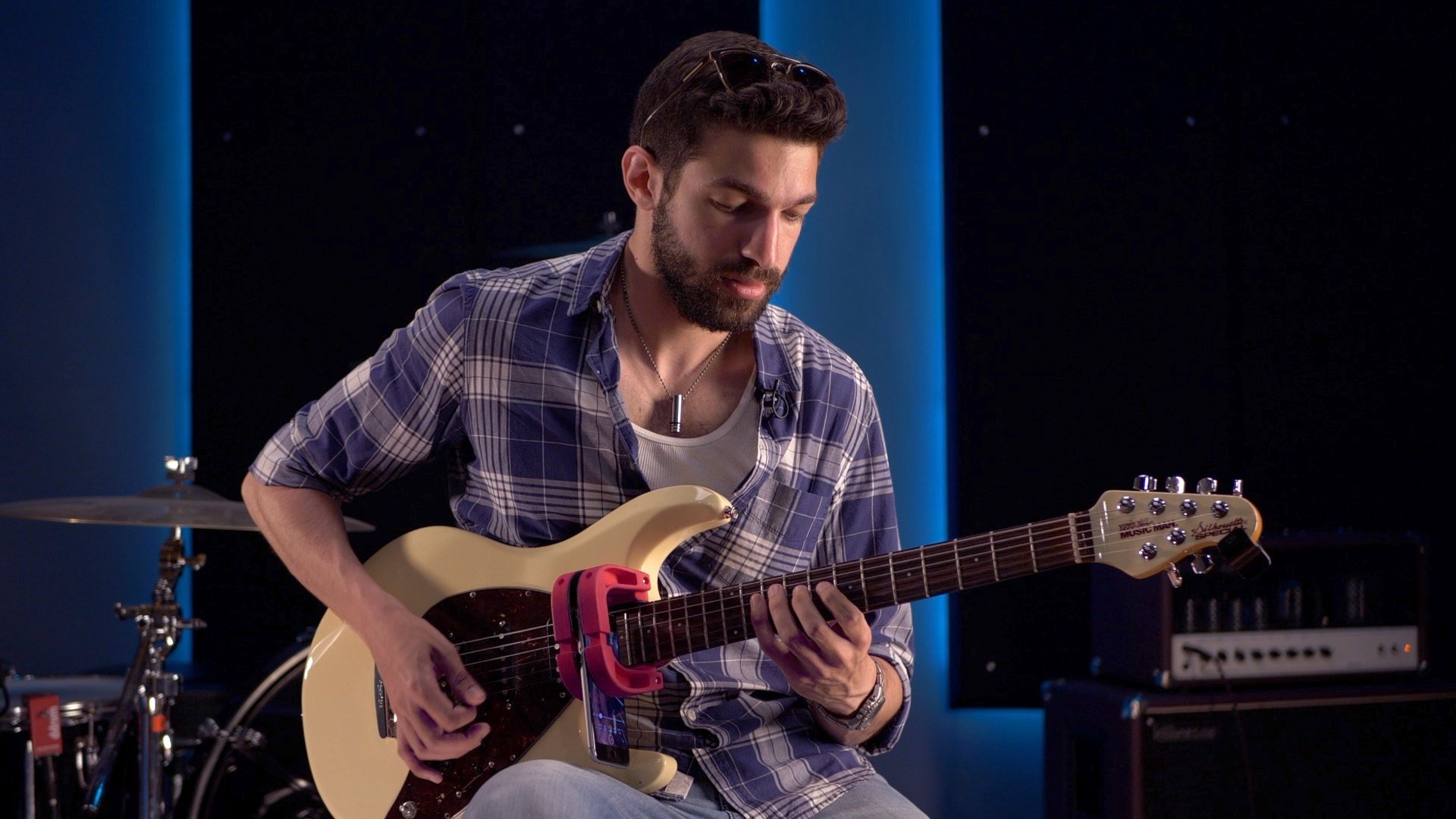
Master hand synchronization with Synchronicity, a groundbreaking seminar incorporating decades of Cracking the Code’s testing and teaching on this critical subject

Do you have trouble synchronizing your hands? Is your picking slower than your fretting? Is your fretting slower than your picking? At Cracking The Code we hear these complaints daily. And our response is the same each time: How do you know? Without a rigorous plan for testing and streamlining both hands, it’s impossible to know why your playing sounds uncoordinated, or how to fix it.

Enter Synchronicity. If you’ve never deliberately worked on synchronization the modern way, it will be eye-opening when you realize just how structured everything is. A synchronized player executing a stream of fast pickstrokes on a single fretted note is NOT just hammering away on a tremolo with no knowledge of where they are in time. Far from it.

Even free-time, accelerando, and rallentando playing is structured. These are just several cases where traditional metronome practice techniques are difficult to employ, and why you won’t actually need a click source for most of the challenges in Synchronicity. Simply put, sychronization is not about matching your motions to an external pulse. It’s about matching them to an internal pulse, tying the hands to each other. This permits locked motions even when the tempo is changing – something that human conductors and live musicians do all the time.

Players like Yngwie Malmsteen and Eric Johnson famously float over the beat while maintaining perfect hand sync through precisely regulated fretting and picking groupings. In Synchronicity we’ll show you exactly how this is achieved.

Synchronicity contains hours of structured study: 40 sequenced and super-watchable lessons; three realistic etudes in Latin, Jazz, and Rock styles; and 32 painstakingly curated rudiments for easy generation of novel practice ideas.

Is Synchronicity right for you? Watch the introductory section below and find out!

NOTE: Synchronicity is brand new! Many groups are already up: Introduction, Core Concepts, Chunking the Picking Hand, Testing Your Fretting, and Core Fretting Patterns – along with the three etudes and all the rudiments. This is already over 40 minutes of the sequence. The remaining sections will upload over the next several weeks as we edit and export. Stay tuned!
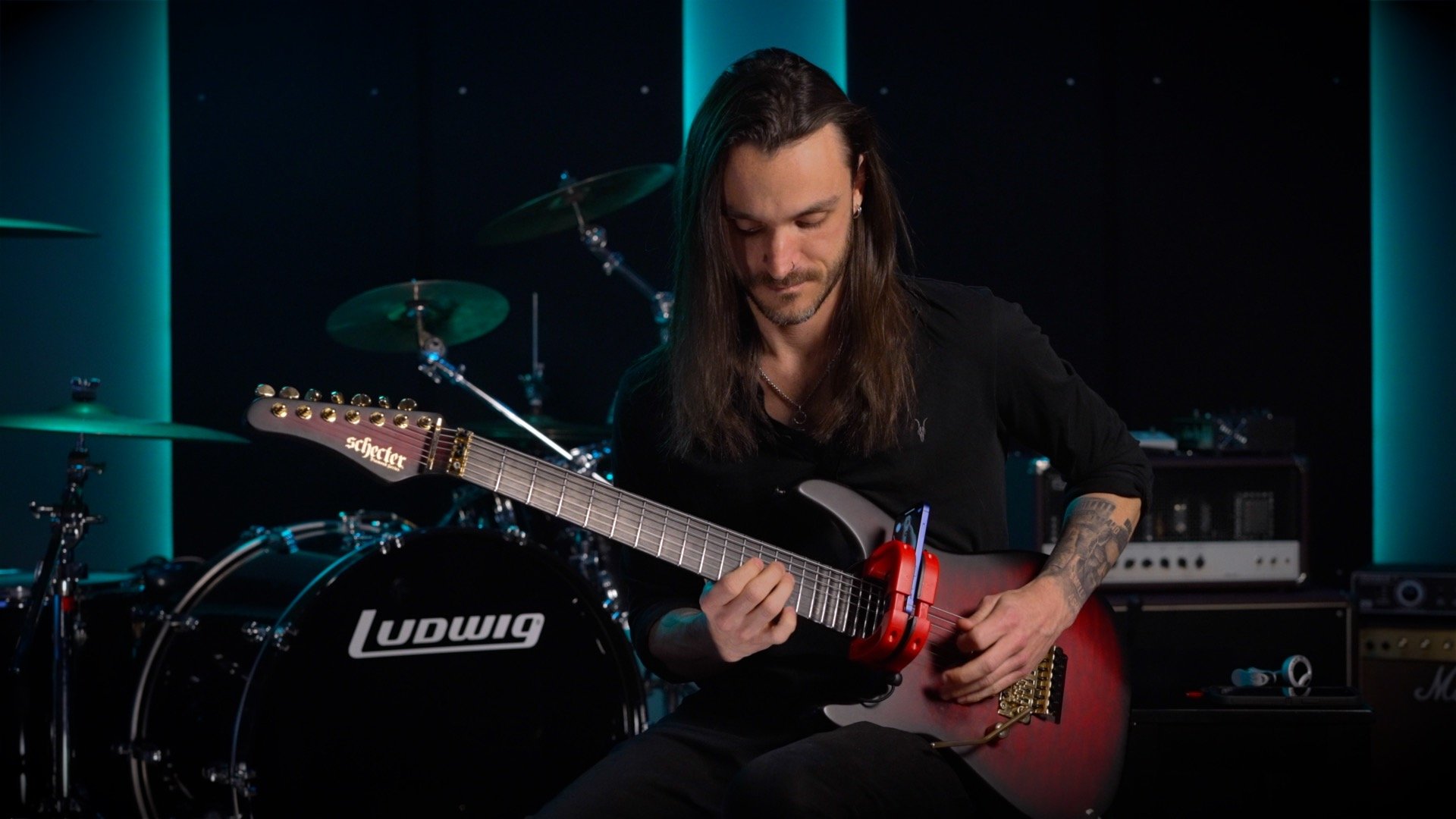
Miles Dimitri Baker

By

Miles Dimitri Baker wields a pick with slashing precision and terrifying articulation, with a thoroughly modern metal tone that leaves nowhere to hide.

Currently holding down lead guitar duties for horror-metal kings Ice Nine Kills, Miles brings an elite level of control and musicality to the band’s cinematic blend of metalcore and macabre. With their theatrical visuals and pun-laced tributes to classic horror, INK has exploded in popularity since The Silver Scream 2: Welcome to Horrorwood—and Miles joined the band at just the right time.

A longtime student of the craft with previous projects like Interloper and Voidbringer under his belt, he blends calculated mechanical mastery with a flair for melodrama. His independent horror-themed Nightfall Clothing Co and his onstage persona show he’s fully embraced the spooky aesthetic, but underneath the mask is a technician of rare skill.

Miles is an expert USX picker who is notably aware of his escape mechanics. In the talk, we explore how he adapts his technique to complex string changes through two-way pickslanting and displacement. He outlines how he maintains surgical clarity even under high gain, including employing multiple fretting-hand muting strategies. An unusual detail: Miles plays lefty despite being a natural right-hander. This flipped positioning gives us some great camera angles, offering targeted views of fretting mechanics and POV-style overhead closeups of the picking hand.

The 76-minute interview features 56 musical examples with tablature, including a full playthrough of the Ice Nine Kills track “The American Nightmare.” It also includes a special 35-minute, six-lesson sequence from Cracking the Code with slow-motion analysis of Miles’ truly fascinating technique.

The Cracking The Code Team

By

Troy

Cracking the Code creator, responsible for setting instructional and business direction. Neologizer in chief for picking mechanics concepts and terms. Previously ran a tech recruiting firm. Before that, uncovered both the secrets of escape motion and little-known numerological patterns in the Divine Comedy as an Italian major. Proud descendant of the land of Joel, Vai, and Satriani.


Tommo

One part Physics PhD, one part physical explorer of the fretboard, Tommo’s position at Cracking the Code is… superposition. By day, he’s a quantum physics researcher; by night, he investigates the mysteries of stringed instrument technique and guides pedagogical direction on the instructor team. Tommo is a publishing fiend, with credits including numerous peer-reviewed papers and two of Cracking The Code’s advanced seminars.


João

João hails from the Brazilian state of Amazonas, where the sound in his videos occasionally includes wildlife in addition to world-class picking. A gifted player with an exceptional command of double escape motion and two-way pickslanting, he brings rare mechanical fluency to some of the most challenging material in our curriculum. João now works with students as part of the instructor team, contributing not just blazing technique but also a thoughtful and curious approach to understanding how all this stuff really works.

Roy Ziv

By

With his killer ear and fearless approach to improvisation, Roy Ziv makes the fretboard his playground

Roy is a social media juggernaut, earning follower counts knocking on the door of seven figures. But his viral appeal isn’t just about feed-scrolling junk food — it’s his deep sense of melody, effortless improvisational flow, and ability to make advanced concepts feel approachable that really impress.

His compositional instincts are immediately engaging. Whether crafting a solo over a pop hit or stretching out in his own compositions, he seems to constantly find hooky phrases that have you reaching for the rewind button.

In our conversation, Roy outlines his process for training spontaneity. Rather than drilling abstract exercises, Roy hones his skills by composing in real time, challenging himself to stumble across novel melodies and phrases in a kind of semi-controlled accident – and then etuding them to make them familiar. His philosophy embraces mistakes as learning opportunities, diving enthusiastically into unfamiliar territory until it becomes second nature.

The hour-long interview features 39 musical examples with tablature, including three extended improvisations showcasing Roy’s signature phrasing and fretboard mastery. The backing tracks are also included for your own creative woodshedding.

Rusty Cooley

By

Presenting a collection of classic meetings with a pioneer of virtuoso guitar

Rusty Cooley is not just a pioneer of technical guitar playing, but also of guitar technique investigation. He occupies a special place in Cracking the Code history as the first player to test each generation of our slow-motion technology: the original computer-controlled ShredCam, and the earliest version of our smartphone-powered Magnet. On display throughout is Rusty’s rare combination of attributes: incredible technique and unflappably chill demeanor in the face of technical roadblocks.

The 2005 meeting was a test flight of our first high-speed video rig for filming musical interviews, and Rusty was its Chuck Yeager. He gamely navigated an awkward assembly of mounting arms and FireWire cables to find playable fretboard space. The 2014 session alleviated some of these challenges, and added new ones with an early, non-adjustable prototype of the Magnet. The new design offered more limited fretboard access, but added vastly more recording time, allowing more natural capture of unplanned moments.

Also included is a special collection of clips filmed with a point-and-shoot camera, amazingly, in 2003. This wasn’t a formal interview, and high-speed filming was still just an idea. But the inability to discern Rusty’s movements in these brief videos helped crystallize the need for more capable tools.

With their experimental equipment and numerous software crash interruptions, these meetings were more like prototype field tests than traditional interviews. The edits include extensive behind-the-scenes gear setup and troubleshooting conversations as a document of the early days of musical mechanics fieldwork.

Painstakingly reimported, edited, and transcribed from the original twenty-year-old footage, the collection is over two hours of interview time and a massive 190 musical examples with tablature.

Obsidian

By

Obsidian is the gateway to the dark art of extreme metal rhythm guitar. Abandon all hope ye who enter!

From the blistering speeds and brutal precision of thrash and death metal, to the atmospheric foreboding of black metal, Obsidian decodes the technical foundations and musical vocabulary of rock’s most extreme musical mutation.

Written, played, and hosted by John Taylor, Obsidian is a comprehensive and meticulously sequenced introduction to extreme metal rhythm guitar. Core topics include muting and downpicking, alternate picking technique, foundational patterns like the gallop and reverse gallop, pedal tone riffs, and more. The seminar also provides an in-depth exploration of John’s astounding hyperpicking technique, capable of alternate picking speeds exceeding 300 bpm sixteenth notes. The analysis includes specific insights from John and Cracking the Code research to help you unlock this ability in your own playing.

The lessons are supported by four of John’s expertly crafted and seriously catchy full-length songs and etudes, and over 70 musical examples with tablature.

Is Obsidian right for you? Watch the introductory chapter below and find out!

Aviva Wolff Interview

By

Dive into the fascinating funtion of one of the most fundamental joints in instrument technique: the wrist.

We sat down with Dr. Aviva Wolff at the Hospital for Special Surgery here in New York for a conversation about the inner workings of the wrist. Dr. Wolff is a member of the Leon Root Motion Analysis Laboratory, where they use high-speed motion capture to study motor function for research and rehabilitation. She’s also an occupational therapist with extensive experience treating elite musicians through a parternership with the famed Juilliard School.

In our coversation, we discuss the group’s research on everday human activities which use transverse or “in-between” axes of the wrist known as the dart thrower motions. Although traditionally less well described than the axes of deviation and flexion/extension which feature prominently in orthopedic study, it turns out that the dart axes may have a trick up their sleeve: strength, stability, and speed.

Tantalizingly, these wrist motions may offer greater performance to the musicians who use them, going at least part of the way to answering age-old questions about differences in ability from one player to another. In our conversation, Dr. Wolff explains the group’s fascinating work in research, in particular their applied focus on rehabiliation of musicians.

Brandon Ellis

By

Dive into harmony and technique with a boundary-pushing metal stylist

Brandon is one of the most exciting players in modern metal. As lead guitarist and key songwriter of the band The Black Dahlia Murder, he mixes a decidedly retro appreciation for the classics (and neo-classics!) with an adventurous sense of harmony that adds excitement at every turn.

Within a metal context Brandon has developed an almost jazz-like harmonic sensibility that incorporates adventurous arpeggiated sounds and clever modulations. In the conversation we visit a number of these inventive ideas, from the use of major add2 arpeggios and the melodic minor mode in metal, to borrowed classical harmony like Neopolitan and augmented sixth chords.

Mechanically, Brandon is not just a great player but also a uniquely intuitive observer of his own technique. Unlike most Cracking the Code interviews where we observe through conversation, in this one we explicitly discuss topics like joint motion and escape motion. More often than not, the Magnet footage reveals that Brandon’s guesses about what’s happening are indeed what is actually happening, even when it comes to the kind of subtle changes that occur during high-speed, high-gain playing.

Tie all this together with Brandon’s relentlessly hooky melody writing and signature swoopy vibrato, and it makes dropping the needle anywhere on a Black Dahlia Murder record one of the most engaging and entertaining guitar listening experiences you can have.

The 1-hour-and-twenty-minute interview features 67 musical examples with tablature, including a complete transcription of Brandon’s rhythm parts and solo on “How Very Dead” by the Black Dahlia Murder.

General Purpose Test Page

By

This is a really great page — and this text comes from the content box in the WordPress UI, not from the page template. If you see it, that means we’re displaying the page ‘content’.