0

Join our list and get 5 free video / tab downloads!

The Synchronicity Seminar is here!

Noa Kageyama

By

In our interview with Juilliard’s Dr. Noa Kageyama, the famed conservatory’s in-house expert on performance psychology and optimal practice habits, we learned about what you can do to objectively assess your strengths and weaknesses, and focus practice efforts accordingly.
Joscho Stephan

By

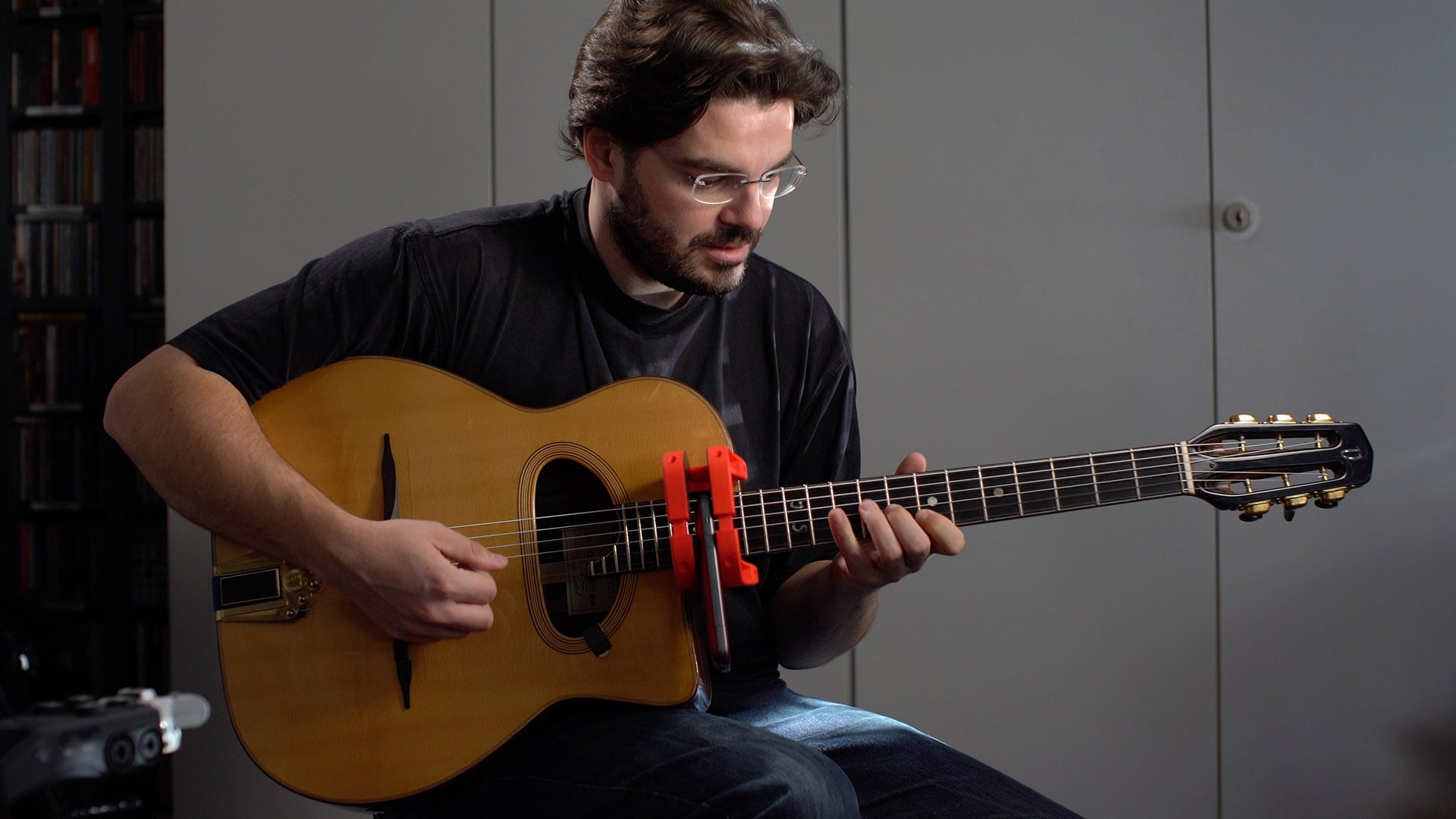
Joscho takes Gypsy founding father Django Reinhardt’s famous adaptation of downward pickslanting mechanics and enhances it with his own turbocharged take on high-speed playing.

In the interview, we discuss the classic Gypsy flexed-wrist approach to forearm rotation, including a closeup look at Joscho’s amazing chord tremolo, multi-downstroke arpeggios and scales, and more. And we also discuss Joscho’s thoroughly modern two-way sweeping and legato passages that would be equally at home on any rock stage.

With one foot in tradition and another in the stratosphere, Joscho is truly a Gypsy for the twenty-first century.

Martin Miller

By

We sat down with fusion ace Martin Miller to investigate the inhuman precision of his hyper-speed crosspicking technique. What we ended up with was even better.

In a wide-ranging conversation, we got to the bottom of Martin’s stunning right-hand approach that reads like a greatest hits of modern picking technique, mixing one-way pickslanting, two-way pickslanting, and crosspicking in equal parts.

But we also get a glimpse into the thought process of an expert soloist and improviser, including composition, fretboard navigation in the CAGED system, and more.

NOTE: We’re still working on Martin’s clips, but they’ll be connected to his interview timeline soon!

Li-sa-X

By

If you’ve seen 10-year-old Japanese guitar phenom Li-sa-X’s YouTube performances, you’re probably as impressed as we are. Her preternatural ability on the instrument has garnered millions of views, frequent Guitar World coverage, and even a spot in a TV commercial!

Bookended by blazing shred performances, this interview provides a close up look at Li-sa’s technique, and shows her a quick student of challenging technical exercises. This is a great example of how advanced mechanical ability can develop at a young age without overt instruction.

Marty Friedman, whose command of the Japanese language now rivals the fluency of his playing, was kind enough to guest host on this one!

Strunz and Farah

By

Strunz & Farah have been making beautiful music together for almost 40 years.

From their debut album Mosaico, which showcased blazing nylon-string flatpicking lines from both players, to their world music breakout successes Primal Magic and Americas, the duo has taken virtuosic harmonized hooks and wrapped them in an atmosphere of modal mystery. But it’s not just fretboard flash. Their undoubtedly fearsome feats of dual-guitar mastery are bound together by a sense of lyrical lead writing that is strong enough to linger long after their songs have finished.

And it really says something that after all this time of writing and playing at this level, they’d still be interested enough in the details of how it all works to sit down for a Cracking the Code interview. What resulted was a fascinating hour-plus investigation of their surprisingly different, yet musically complementary mechanical approaches.

To accompany the interview, we created six analysis chapters with over an hour of in-depth technical tutorials, covering the upward pickslanting techniques of Ardeshir Farah and John McLaughlin, and the swiping technique that powers Jorge Strunz’s complicated lines.

Albert Lee

By

Behind some of the biggest names in country and rock is one of the biggest names in country guitar.

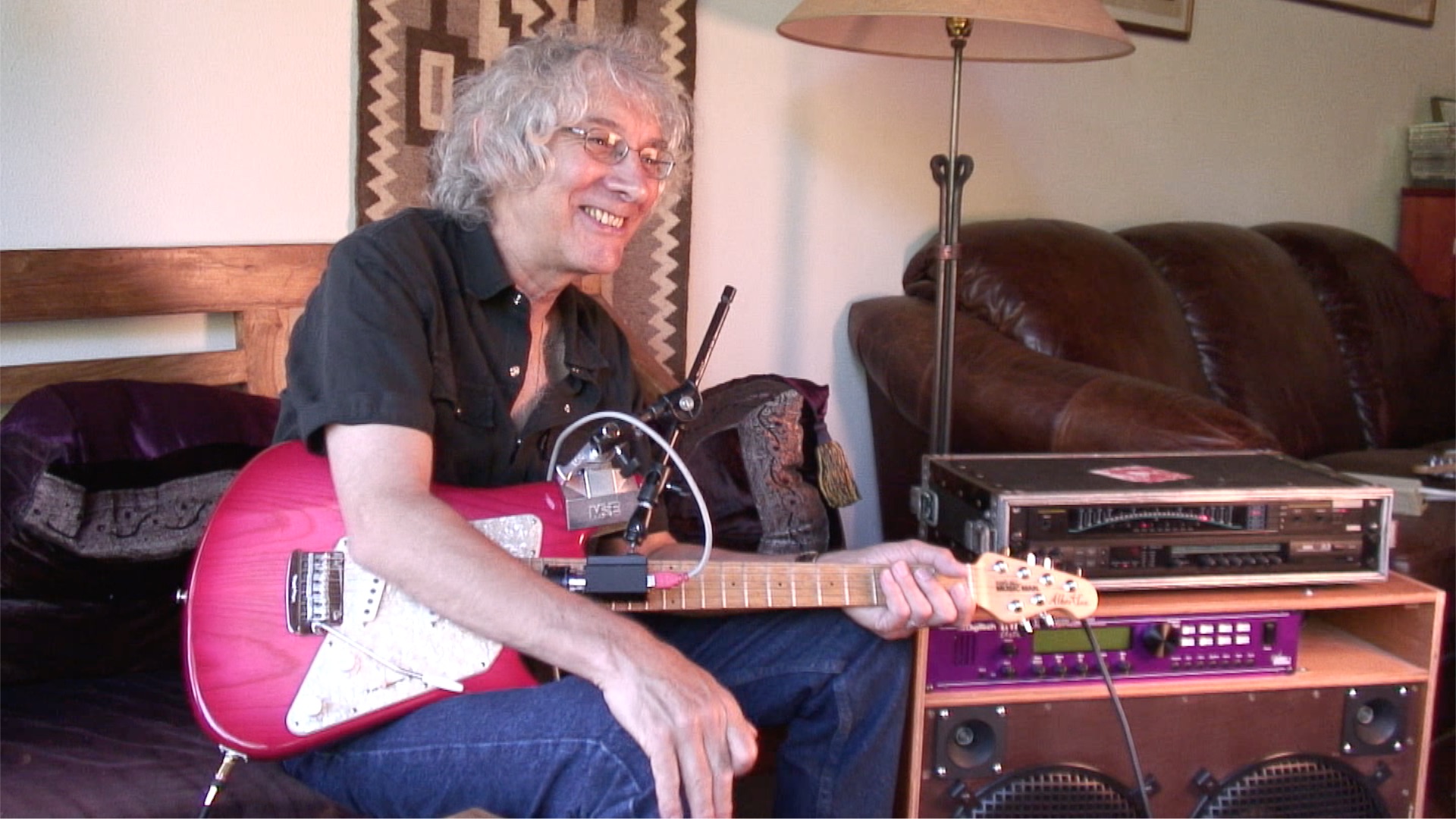
A session player and sideman since his teens, Albert Lee’s talent took center stage in the early ’70s as lead guitarist in the seminal roots rock group Head, Hands, and Feet. One part Doobie Brothers, one part Stanley Brothers, the short-lived HH&F nevertheless supplied enough spiritual grist for generations of alt-country rockers. A key ingredient in this was Albert’s groundbreaking sound — an effortless fusion of picking, slides, bends, and rolls that evoked country while embracing the energy of rock.

Albert’s HH&F country-rock showpiece Country Boy was a huge crossover hit when it was covered by flatpick legend Ricky Skaggs in the ’80s, introducing the toe-tapping virtuosity of bluegrass to a wider commercial audience. Meanwhile Albert’s ever-expanding list of fans grew to include notably non-country luminaries like Eric Clapton and Eddie Van Halen, both of whom have shared the stage with him. Indeed, few players can claim so much admiration from so many musical quadrants — fitting for a country player who was born in England, raised on rock, and who has called the rolling hills of California his home for the majority of his highly influential career.

In his Masters in Mechanics interview, we take an in-depth look at the fascinating mechanics behind Albert’s unstoppable groove. The hour-long interview includes 7 chapters of analysis, and over 50 slow-motion, up-close examples with one of the all-time great right hands in country and rock.

Carl Miner 2007

By

Nashville studio ace and bluegrass flatpicking champion Carl Miner tackles scalar and arpeggiated phrases with startling ease in this revealing discussion of his flawless crosspicking fluidity.

Our first interview with Carl was conducted at the 2007 National Guitar Flat Pick Championship in Winfield, Kansas, and also includes three hours of the competition itself: over 30 first-round contestants, four second-round finalists, and three winners.

Jimmy Bruno

By

In this intimate chat with the amazing Jimmy Bruno, we explore the intricate two-way pickslanting and two-way sweeping mechanics that power his masterful bop excursions.

In the conversation, Jimmy dives into his seemingly endless reservoir of creativity and produces a veritable rainbow of harmonic ideas: dominant, diminished, augmented, altered, suspended and more. Download includes the one-hour conversation and over 60 slow-motion clips with tablature.

Marty Friedman

By

Get ready for an unguarded conversation with one of metal’s most inimitable lead guitar voices: Marty Friedman.

In this hour-long discussion, we touch on topics both mechanical and musical, and go under the hood with one of the most distinctive picking techniques of the last thirty years.

Steve Morse

By

Even among virtuoso players, Steve Morse could be considered a daredevil. In following his subversively creative muse through groundbreaking projects in fusion, rock, and metal, Steve has set the benchmark for a certain kind of originality on the guitar, routinely facing down licks other players simply won’t touch.

Seemingly unhindered by the physical limitations of the instrument, and equally unimpeded by barriers of genre, Steve has forged a distinctively — to use his term — un-guitaristic style. His work as the creative force behind The Dixie Dregs reinvigorated the fusion movement of the late seventies with an injection of sounds that was equal parts roots and sophistication. In the process, Steve stole elements of rock, jazz, and bluegrass to create spellbinding unison lines for guitar and fiddle, pianistic one-note-per-string arpeggio figures, and greasy chicken picking guitar grooves.

Without the safety net of guitar-approved box patterns and legato cop outs, Steve innovated an approach to right-hand technique that remains the benchmark of dexterity on the instrument. In particular, his approach to alternate picked arpeggios, and other tricky string-skipping motifs, has never been equaled. Since 1994, Steve has applied these talents as successor to the iconic Ritchie Blackmore in the legendary proto-metal band Deep Purple. Steve’s iconoclastic compositional and mechanical approaches have helped the band break new stylistic ground, winning acclaim from both critics and long-time Purple fans alike. Not bad for a Dreg.