
When riffs, comedy, and storytelling collide, it’s time to prep for the Metalocalypse!
Rarely do so many skills grace the course of one career, let alone at the same time. And yet without this unlikely convergence of musical and cinematic creativity, the Metalocalypse might never have arrived. When it launched on Cartoon Network in 2006, the show was an instant hit. It was a lovingly calibrated satire of modern metal chronicling the disastrous exploits the fictional and yet all-too-real megaband Dethklok. The show’s pitch-perfect sendups of metal personalities rang immediately true, drawing a stream of enthusiastic leather-studded cameos from the likes of James Hetfield and Steve Vai.
But behind Metalocalypse’s arch parody was a seriously astute tribute to the music itself. The show’s animated visuals featured accurate instrument technique closeups as the band careened through a soundtrack packed with monster hooks and crushing guitar work that was good enough to stand on its own. This launched the virtual band into reality, as Brendon and a team of crack players brought Dethklok to life across three soundtrack albums and multiple tours.
In the Dethly Riffs interview, we dive into both the rhythm and lead techniques behind Brendon’s Dethklok and subsequent Galaktikon solo projects, tackling playthroughs of Dethklok’s punishing “Dethsupport” and Galaktikon II’s epic tremolo-powered “Icarus Six Sixty Six”. The technical talk investigates Brendon’s multiple approaches to fast thrash-style downstrokes, as well as a detailed examination of his intuitive command of single-note lead playing. We tease out the artful combination of wrist motions he uses to tackle three-note-per-string scales in the intensely rocking Paul Gilbert style. And we break down how those motions transition seamlessly to even faster elbow mechanics.
In the second conversation, Brendon takes us behind the curtain for a look at how Metalocalypse came to be. How do you fit Mark Hamill, Malcolm McDowell, and a coked-out rock and roll clown into 11 minutes of metal mayhem? Stay tuned to find out!
The three-hour interview set includes two song playthroughs and over 60 musical examples.

When he’s not touring the world with Alcatrazz, Joe Stump spends his days defending the dark arts of metal at Boston’s famed Berklee College of Music.
If Joe’s day job and his night job both sound a little scary, never fear. Despite his self-identification as a specialist in “evil chords” and “dark scales”, Berklee’s very own Professor Snape is secretly a wonderfully affable guy who’s always forthcoming about how he works his sinister-sounding magic.
Our discussion with Joe ranges from the harmonic to the mechanical, covering cool topics like arranging seventh chords with metal-friendly voicings, and comparing and contrasting the metal-ness of the harmonic minor, Hungarian minor, Phrygian Dominant, and Byzantine scales.
Of course, we also get a good close-up look at Joe’s famously fluid command of economy picking, including his Gypsy-style use of sequential downstrokes to link phrases at high speed. And no discussion of neoclassical techniques would be complete without an investigation of Joe’s awesome pedal-tone mastery.
When your day job involves giving away all your secrets to a small army of hungry shredders, you better do your homework. And at Berklee, Professor Joe Stump’s major is clearly minor.
Welcome to Deal Country!
Population: You.
Thanks for coming over from Instagram. If you’re looking to transform your guitar technique, you’re in the right place!
So, wondering what this deal is all about?
Masters in Mechanics membership is your all-access pass to Cracking the Code. With membership, you can watch our entire library — hours of hands-on lessons, dozens of interviews, and thousands of musical examples with interactive tablature.
We’ve set up a special offer for you to try it out — hit the button below to sign up now and get 50% off your first month.
If you stay subscribed, your membership will renew at the regular rate. If you cancel any time within your first month, we won’t charge you again. And we’ve made sure cancelling is hassle-free, just a couple clicks right from your “Account” page.
If you have any questions, shoot us a note: support@troygrady.com. Want to look around a bit more first? You can explore the site here.
We look forward to having you as part of the Cracking the Code Community!
— Troy, Brendan, and Adam

The elbow is the simplest of the big-three arm joints, but it’s still highly capable as a core motion. It’s also the fastest joint in picking technique, generating the most rapid human motion ever measured in a laboratory setting, at over 300 beats per minute sixteenth notes.
The elbow does not possess the multi-axis capability of joints like the shoulder and wrist. Nor does it possess the rotational capability of joints like the forearm. Instead, it’s a simple hinge, moving the both forearm bones back and forth in a single plane.
For guitar players, what this means is that — as far as we know — the elbow is capable of only downstroke-escape or DSX motion. While this may sound limiting, the elbow is still highly capable as a core motion when supplemented by others. Forearm motion, wrist motion, and finger motion can all be incorporated to expand the elbow’s string-switching capabilities. Even when the elbow operates alone, techniques like sweeping and swiping can still be used to provide great mechanical variety for musical expression. In short, if you’re good at elbow motion, there’s every reason to get even better at it.

With so many picks available in just about every shape, size, and material, how do you choose one?
For our most compact introduction to pick selection, check out our lesson on “The Rule Of Roundness”. It’s a great summary of the most important ways that pick shape affects your playing. If you’re ready to start improving your technique, this single video is all you’ll need to select the right tools and get playing.

Looking for feedback on your playing technique? The Cracking The Code Instructor Team is on the case.
With a Cracking the Code subscription, you can upload clips of your playing for feedback from our instructors by making a “Technique Critique” right inside your account. You can access Technique Critique on your dashboard by clicking the “TC” icon:
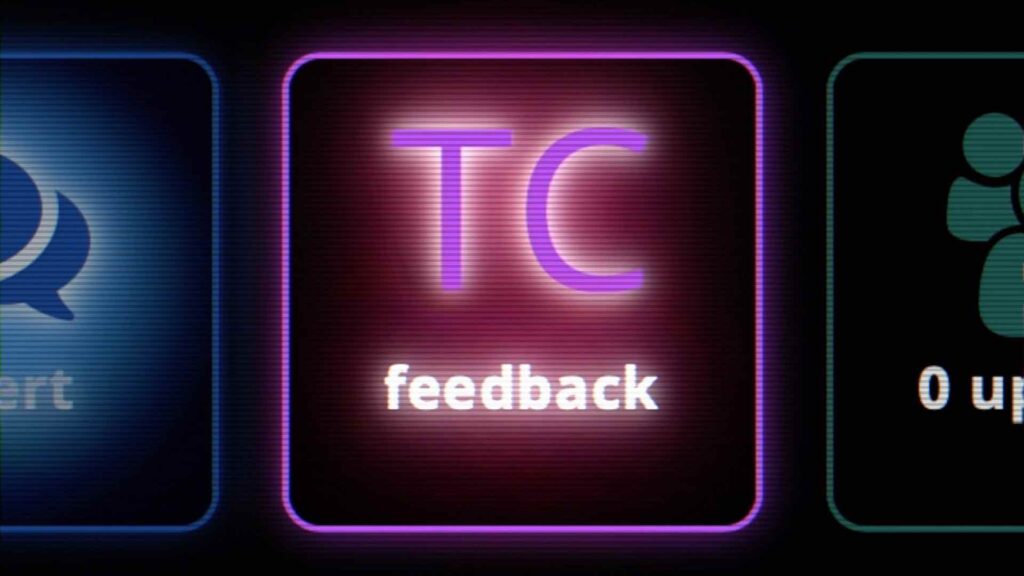
In this section, we’ll take a look at how to film and upload videos, create platform Technique Critiques, or “TCs”, and make free public forum TC threads for feedback from the community.

The Pickslanting Primer is our instructional overview of the universe of picking technique.
It represents years of research and interviews with some of the world’s best players to understand how picking technique really works. It’s the most comprehensive instructional product of its kind, and it’s always getting better! In this quick overview, we’ll take a look at what topics we cover in the Primer, and how to follow along with the lesson sequence.

Alternate picking motion is the core of your picking technique, but not all motions that go back and forth fit the definition.
The most fundamental skill in picking technique is the ability to play a sequence of notes with a continuous reciprocating motion of the pick. In this section we’ll learn what a picking motion needs to accomplish to be a true alternate picking technique.