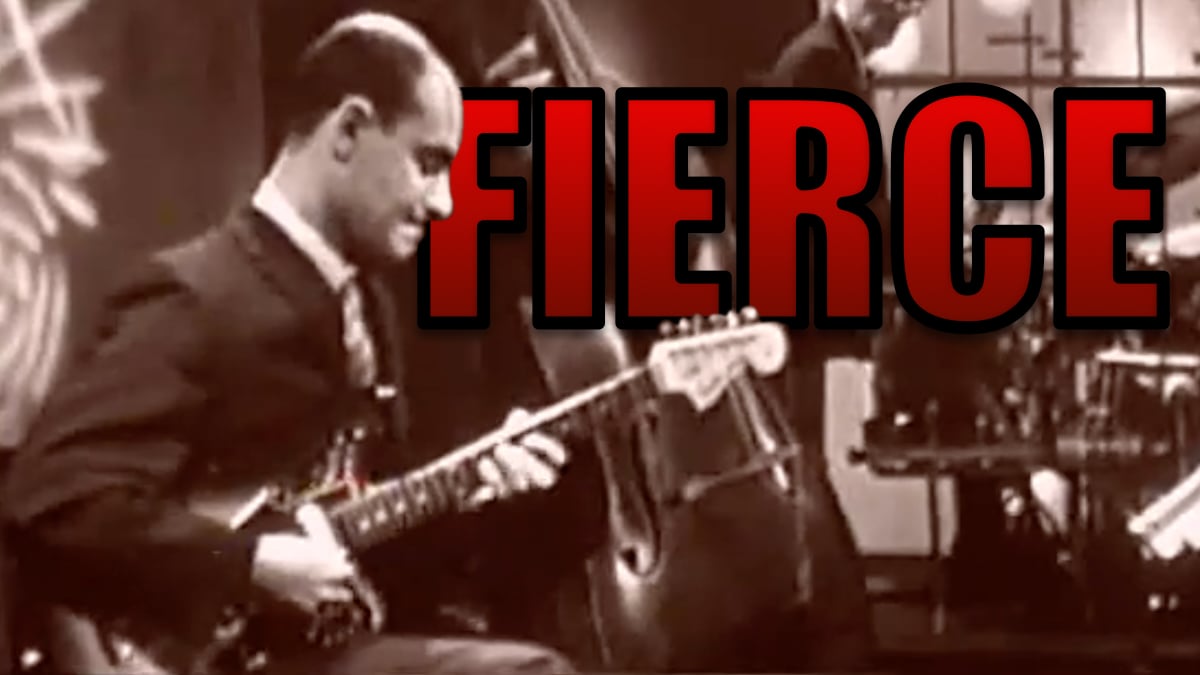
Our latest YouTube feature is a deep dive into the surprisingly terrifying shred technique of a younger Joe Pass. It’s a collaboration with peerless transcriber and guitar educator Levi Clay, who supplied the musical and historical erudition, while Cracking The Code handled the plectrum plumbing. It’s a mammoth 40-minute investigation: one part documentary and one part instructional video.
The Elder Statesman
When you think of Joe Pass, you probably imagine a smiling avuncular figure, seated alone on a stage with an almost comically oversized jazz-box guitar, performing toe-tapping, fingerstyle renditions of standards like “Ain’t Misbehavin'”.
And you wouldn’t be wrong. This image was cemented in the popular consciousness by the massively successful latter half of Joe’s career. Through numerous television performances, both solo and as an accompanist with jazz legends like Ella Fitzgerald and Oscar Peterson, Joe may have done more than anyone before him to elevate the guitar to headline status among mainstream audiences.
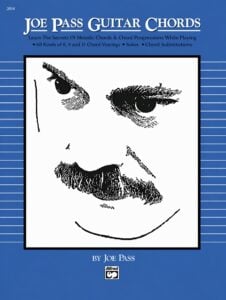
He had the same effect on guitarists. His ubiquity on music store shelves was such that even a 1980s teen who aspired to glam rock greatness might likely own a copy of Joe’s “Guitar Style” (the orange one) or “Guitar Chords” (the blue one), both from Alfred Publishing.
I bought the blue one because Joe Satriani had mentioned it in an interview once. I didn’t know what to do with it. But Pass had become so representative of jazz guitar skill that it was reasonable to think you might somehow become jazz-level smart just by possessing one of his totems.
The Hotshot
But… there’s another Joe. This one displays the more obvious kind of superpowers a Satrani fan would be looking to acquire. He’s a young hotshot melting faces with blazing single-note lines on a solid-body Fender Jaguar through a blonde Bandmaster.
And despite what the Jaguar’s beach-focused 1962 launch campaign would have you believe, the sound is not surf rock – it’s bebop. In this amazing live television performance from same year, the player is a thirty three year-old Joe Pass absolutely laying it down:
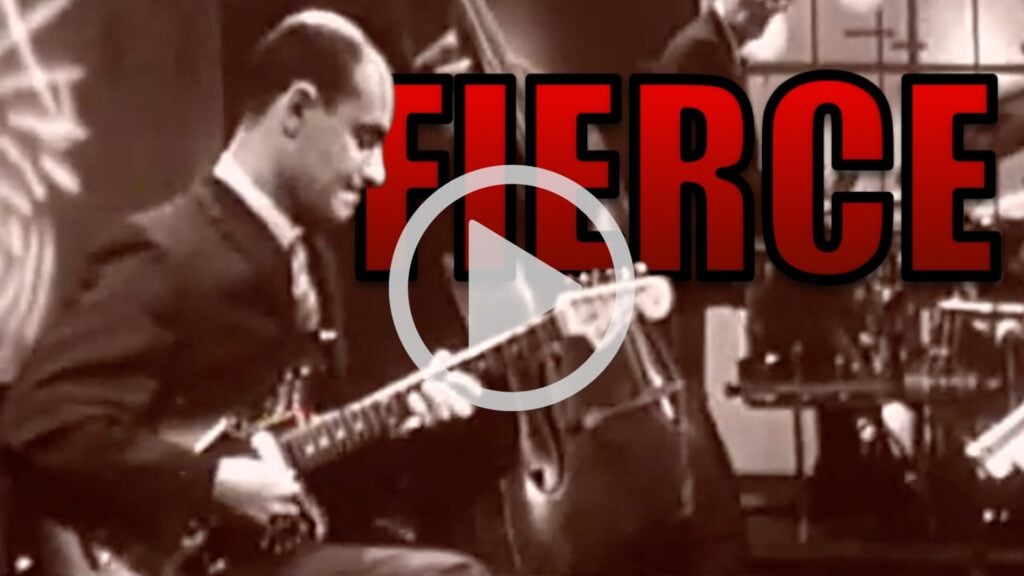
The Synanon Era
After a tumultuous run of incarcerations under the overly punitive drug laws of the 1950s, and a two-year stint in rehab in the early sixties, Joe had emerged with a clean slate and fire in his belly.
He appeared on a local Los Angeles TV music program, “Frankly Jazz”, hosted by jazz radio personality Frank Evans, in November of 1962. The players, including Joe, were assembled from the patients at the Synanon drug treatment center in Santa Monica.
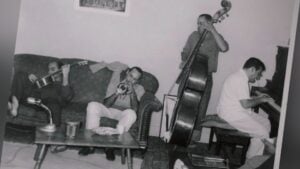
Synanon would go on to infamy as a cult, including its own murder scandal, later in the decade. But Joe appears to have dodged that bullet. Early Synanon was closer to a more empathetic and recovery-focused vision of rehab. It attracted an array of amateur and professional jazz artists struggling with addiction.
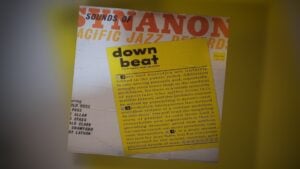
The center produced an actual vinyl LP release, “Sounds of Synanon”. Its cover art was a clipping of a DownBeat article debunking the association between drugs and jazz. If it was propaganda, it was worth it, because it featured a refreshed and unleashed Joe Pass who was finally ready for his closeup.
The Song Is You
On “Frankly Jazz”, the quartet barreled through a swinging uptempo take of the Jerome Kern classic “The Song is You”. As this stunning footage makes clear, Joe’s picking was a full-blown USX technique with all the trimmings: fluid and fast upstroke escape motion, downstroke sweeping, legato slides, and Gypsy-style eighth-note downpicking at 270 beats per minute.
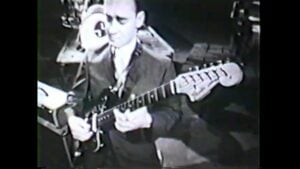
Joe’s lines displayed his trademark tasty harmonic awareness, but this time rendered in high-octane for a sixties guitar audience. His two-minute solo is athletically daring and relentlessly inventive, full of catchy hooks and clever outside excursions.
In the lesson we take a detailed look at all of these technical elements, along with a biographical overview and musical commentary from Levi. Head on over to the clip and check it out. If you can’t resist grabbing a guitar before its forty (!) minutes are up, we won’t be surprised.


You may have already seen this - it’s our latest YouTube feature about young Joe Pass and his ridiculous USX technique. As great as older Joe was, young Joe was great in a different way with his furious yet tasty bebop shredding.
We did this lesson with the amazing Levi Clay, who transcribed the whole thing - bless his soul. He then recorded some expert historical and musicological commentary to go along with our mechanical teaching. Great stuff!
The whole thing is 40 minutes long, which was a workout to edit. But there’s a lot of good stuff in here. And it’s getting some good traction, and it’s always nice when that pays off.
This video is great! I’ve started transcribing this solo a few times, to get inside his fingering patters. This makes me realize I need to get back to it. Great work on this one. There are a few strange things he does that I found when slowed down to 1/4 speed, like strange double upstroke string crossing, descending, if I remember correctly. It doesn’t seem to make sense until you do the lick at speed and then you feel the bounce of the rh rhythm and it works… Transcription only at Levi’s?
Hi
Where is the transcription ?
Thanks
Sorry for the delay! Pedro posted the correct link to Levi’s transcription.
In general I didn’t notice anything that looks like two sequential upstrokes in the section I learned. But there is one moment where you have upstroke-pulloff on a higher string followed by a single upstroke on the next lower string, which only has one note on it.
If that’s what you are referring to, this is also how the Yngwie arpeggios work: upstroke-pulloff on the top string, then just upstroke on the middle string. It’s a common sequence in USX playing:
In the Joe solo, m. 117-118 has this. The G string goes down-up-pulloff. Then the D string is just an upstroke.
Jason was great, but he looked like a wrist player, in roughly the same technique ballpark as Jeff Loomis and Andy Wood. Our tutorials already cover this pretty well.
So for the short term, I would focus on getting a smooth/fast tremolo using our reverse dart tutorials. I would not try to overthink it beyond that, since most players with Jason’s form all end up in the same technique ballpark regardless.
With fast wrist motion plus good hand sync on simple single-string patterns, you can probably play most of Jason’s picked lines. If you want to do 3nps scales in a straight line, you can throw in some 2wps down the road. But I would not worry about this to get started since it amounts to a special case. The most common shreddy patterns are simple DSX or outside picking lines, and Jason’s vocabulary seems to fit this too.
Instead, get the core motion going on a single string with the fretting locked in, and you are probably 85% of the way there!