
Synchronicity

Master hand synchronization with Synchronicity, our in-depth seminar built from decades of Cracking the Code testing and teaching.

Is your picking faster than your fretting? Is your fretting faster than your picking? Do fast phrases sound uneven, rushed, or disconnected even when each hand seems capable on its own?

That’s what Synchronicity is designed to solve.  Instead of guessing which hand is the problem, you’ll learn how to test both hands, identify where the mismatch is coming from, and build phrases that feel locked-in at speed.

You’ll also learn why synchronization is not just metronome practice. Great players can speed up, slow down, and float over the beat while keeping the hands connected. Synchronicity shows how that works through organized picking and fretting patterns you can actually practice.

Inside the seminar:

  • 58 sequenced lessons
  • 3 musical etudes in Latin, Jazz, and Rock styles
  • 32 curated rudiments for generating focused practice ideas
  • A structured framework for troubleshooting hand synchronization

Synchronicity is for players whose fast lines feel uneven, disconnected, or unreliable — especially when ordinary practice has not solved the problem.

Watch the introductory section below to see if it’s right for you.

Introduction

Chapter 1 - Synchronicity Seminar Overview

What's covered and who it's for

Chapter 2 - Synchronicity Requirements

What skill level do you need for Synchronicity?

Core Concepts

Chapter 1 - Internal vs External Synchronization

Following your internal metronome

Chapter 2 - Constant Picking Speed

Create complex practice phrases with this simple concept

Chapter 3 - Chunking

The foundation of motor memory

Chunking The Picking Hand

Chapter 1 - Chunking Twos

The alternate picking atom

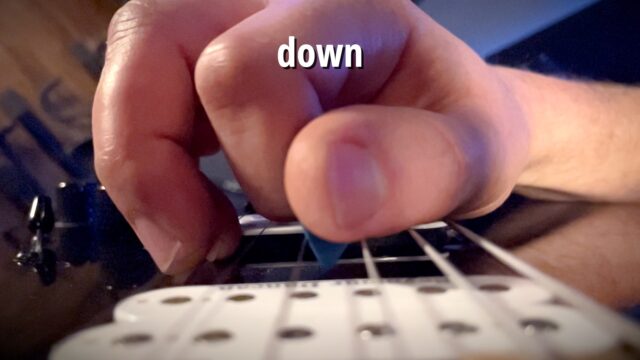
Chapter 2 - Downstroke Vs Upstroke Chunking

Tracking your playing with a landmark pickstroke

Chapter 3 - Tremolo Fours And Sixes

The most common chunks in fast phrasing

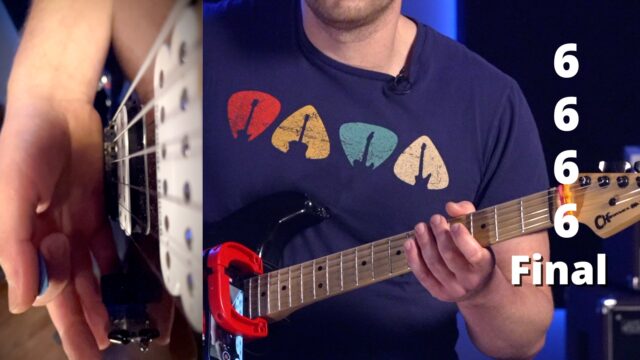
Chapter 4 - The Final Chunk

The easiest way to stick the landing

Chapter 5 - The 65-Note Challenge

Metachunking for long lines

Testing Your Fretting

Chapter 1 - Fretting Diagnostics

Tips for testing the fretting hand

Chapter 2 - Legato Basics

A crash course in pick-free playing

Chapter 3 - Three-Note Shapes

Naming the most important shapes in fretting

Chapter 4 - Three-Note Fingerings

Ranking your finger-to-fret combinations

Chapter 5 - The Hammer-Pull Test

A single pluck as a core testing tool

Chapter 6 - Chromatic Shapes

Four fingers is a core skill

Chapter 7 - Two-Note Shapes

Terrible twos and trills

Chapter 8 - Including Open Strings

Augmenting your reach with a mechanical freebie

Chapter 9 - Roll Pattern Speed

Use these elemental patterns as powerful diagnostics

Chapter 10 - Testing The Fretting Matrix

Score your skills with this comprehensive fretting inventory

Chapter 11 - Rushing

Isolating the most common fretting error

Chapter 12 - Larger Motions

Generating stronger feedback for faster learning

Fretting Test Clips

Core Fretting Patterns

Chapter 1 - Six-Note Patterns

Why six is a pillar of efficient chunking

Chapter 2 - The Power Of Permutations

Unlock killer variations with a simple mod

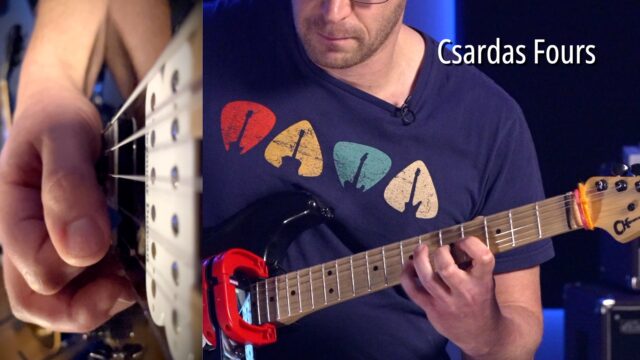
Chapter 3 - Four-Note Patterns

Speed Racer, Csardas, and more

Chapter 4 - Odd-Numbered Patterns

Secretly the most efficient fretting motions you can make

Chapter 5 - Chromatic Patterns

More fingers means more variety

Chapter 6 - Single-String Shifting

Keeping it together horizontally

Chapter 7 - Vertical Scales

Keeping it together across the strings

Putting The Hands Together

Chapter 1 - Tremolo Melody

Fast picking with slow(er) fretting

Chapter 2 - Pedal Tones

Iron Maiden and Pat Martino join forces

Chapter 3 - One Note Per Pickstroke

Achieving fine-grained motion timing

Chapter 4 - Synchronization Rudiments

Assembling synchronized building blocks

Chapter 5 - Trills

Hacking the least economical fretboard pattern

Troubleshooting Checklist

Chapter 1 - Detecting Errors

You can't fix what you can't observe

Chapter 2 - Checking The Chunk Note

Aligning the landmark motion

Chapter 3 - Checking The Pickstroke Count

Verifying chunk size

Chapter 4 - Checking Internal Synchronization

Testing note and finger assignment

Chapter 5 - Using Deliberate Repeated Notes

Turning a mistake into a new skill

Chapter 6 - Testing Compatible Patterns

Keep the picking, change the fretting

Chapter 7 - Testing Pattern Permutations

Keep the fretting, shift the start

Chapter 8 - Exploiting Loops

More repetitions for stronger feedback

Changing Positions

Chapter 1 - Shifting

Relocating your fretting with efficiency

Chapter 2 - Slides

One finger, two notes

Chapter 3 - Yngwie Fours

An ingenious and endlessly useful shifting pattern

Beat Orientation

Chapter 1 - What Is Beat Orientation

Which pickstroke gets the downbeat?

Chapter 2 - Downstroke And Upstroke Orientations

Two chunking systems for alternate picking

Chapter 3 - Switching Beat Orientation

Flipping metric alignment can simplify mechanics

Chapter 4 - Non-Alternate Picking Patterns

Classic mechanics with complex chunking

Chapter 5 - Beat Orientation Checklist

A simple chunking decision tree

Advanced Chunking

Chapter 1 - Pickups

A common yet tricky special case

Chapter 2 - Rhythmic Rechunking

Mixing chunks and meter

Chapter 3 - Fives

Mastering the smallest truly odd chunk

Chapter 4 - Sevens

The longest common odd chunk

Chapter 5 - Steve Vai Sevens

Turn the Devil's weapon against him!

Conclusion

Mistakes Versus Musicality

Not all errors are created equal

Songs

How To Use The Etudes

Exploiting stealth single-string construction

Latin Etude

The "other" shred guitar: nylon-string acoustic

Rock Etude

Fast sequences for modern hard rock and metal

Jazz Etude

Classic fast bebop vamp arranged for single-string speed

Tracks And Tablature

Rudiments

How To Use Rudiments

Make the most of these fundamental patterns

Rudiment Clips