Master hand synchronization with Synchronicity, a groundbreaking seminar incorporating decades of Cracking the Code’s testing and teaching on this critical subject
Do you have trouble synchronizing your hands? Is your picking slower than your fretting? Is your fretting slower than your picking? At Cracking The Code we hear these complaints daily. And our response is the same each time: How do you know? Without a rigorous plan for testing and streamlining both hands, it’s impossible to know why your playing sounds uncoordinated, or how to fix it.
Enter Synchronicity. If you’ve never deliberately worked on synchronization the modern way, it will be eye-opening when you realize just how structured everything is. A synchronized player executing a stream of fast pickstrokes on a single fretted note is NOT just hammering away on a tremolo with no knowledge of where they are in time. Far from it.
Even free-time, accelerando, and rallentando playing is structured. These are just several cases where traditional metronome practice techniques are difficult to employ, and why you won’t actually need a click source for most of the challenges in Synchronicity. Simply put, sychronization is not about matching your motions to an external pulse. It’s about matching them to an internal pulse, tying the hands to each other. This permits locked motions even when the tempo is changing – something that human conductors and live musicians do all the time.
Players like Yngwie Malmsteen and Eric Johnson famously float over the beat while maintaining perfect hand sync through precisely regulated fretting and picking groupings. In Synchronicity we’ll show you exactly how this is achieved.
Synchronicity contains hours of structured study: 40 sequenced and super-watchable lessons; three realistic etudes in Latin, Jazz, and Rock styles; and 32 painstakingly curated rudiments for easy generation of novel practice ideas.
Is Synchronicity right for you? Watch the introductory section below and find out!
NOTE: Synchronicity is brand new! Many groups are already up: Introduction, Core Concepts, Chunking the Picking Hand, Testing Your Fretting, and Core Fretting Patterns – along with the three etudes and all the rudiments. This is already over 40 minutes of the sequence. The remaining sections will upload over the next several weeks as we edit and export. Stay tuned!
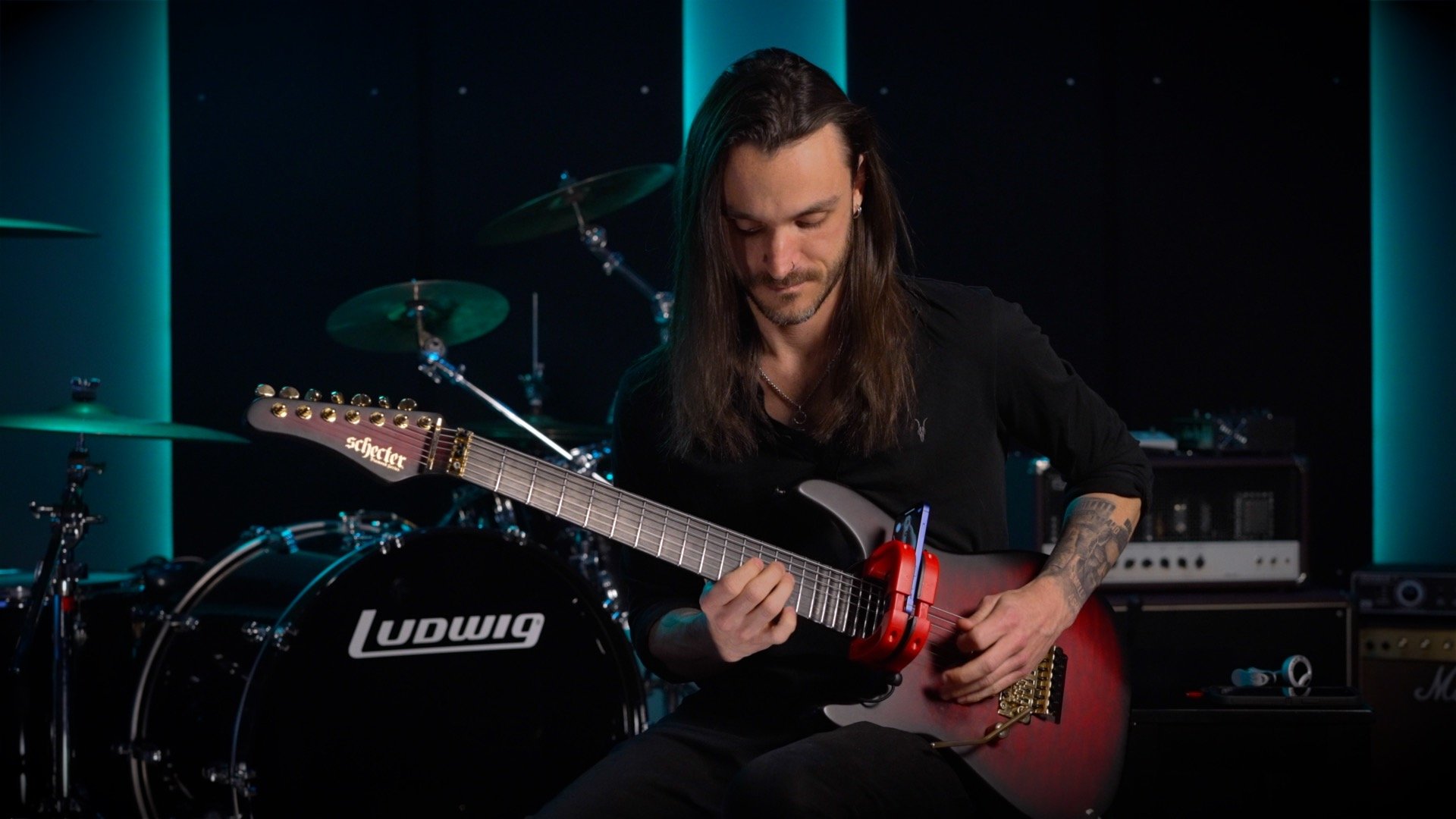
Miles Dimitri Baker wields a pick with slashing precision and terrifying articulation, with a thoroughly modern metal tone that leaves nowhere to hide.
Currently holding down lead guitar duties for horror-metal kings Ice Nine Kills, Miles brings an elite level of control and musicality to the band’s cinematic blend of metalcore and macabre. With their theatrical visuals and pun-laced tributes to classic horror, INK has exploded in popularity since The Silver Scream 2: Welcome to Horrorwood—and Miles joined the band at just the right time.
A longtime student of the craft with previous projects like Interloper and Voidbringer under his belt, he blends calculated mechanical mastery with a flair for melodrama. His independent horror-themed Nightfall Clothing Co and his onstage persona show he’s fully embraced the spooky aesthetic, but underneath the mask is a technician of rare skill.
Miles is an expert USX picker who is notably aware of his escape mechanics. In the talk, we explore how he adapts his technique to complex string changes through two-way pickslanting and displacement. He outlines how he maintains surgical clarity even under high gain, including employing multiple fretting-hand muting strategies. An unusual detail: Miles plays lefty despite being a natural right-hander. This flipped positioning gives us some great camera angles, offering targeted views of fretting mechanics and POV-style overhead closeups of the picking hand.
The 76-minute interview features 56 musical examples with tablature, including a full playthrough of the Ice Nine Kills track “The American Nightmare.” It also includes a special 35-minute, six-lesson sequence from Cracking the Code with slow-motion analysis of Miles’ truly fascinating technique.